Energy-Efficient Windows and Colorado's Altitude: What You Need to Know at 6,300 Feet
Michael Young
Window & Door Expert
Learn why altitude matters for window performance in Colorado Springs and how energy-efficient upgrades can cut your heating and cooling bills.
Living in Colorado Springs means dealing with weather that most of the country can not imagine. Sixty-degree afternoons followed by single-digit nights. Hailstorms in June. UV radiation strong enough to fade your furniture through the glass.
Your windows take the brunt of all of it. And if they were not designed for our altitude, they are probably costing you more than you realize.
What Makes 6,300 Feet Different
I have been installing windows along the Front Range for over a decade, and one thing I have learned is that elevation changes everything about window performance. Here is why.
UV Radiation Is No Joke
At our altitude, we get about 25 percent more ultraviolet radiation than homes at sea level. That UV does not just give you a sunburn. It breaks down window seals, degrades vinyl and wood frames, fades your flooring and furniture, and reduces the lifespan of standard windows by years.
This is why Low-E coatings are not optional in Colorado Springs. They are essential.
Pressure Differentials Stress Seals
The lower atmospheric pressure at altitude means there is a constant pressure difference between the gas sealed inside your window panes and the air outside. Over time, this can cause seals to flex, weaken, and eventually fail. You have probably seen it: that cloudy, foggy look between the panes of an older double-pane window. That is seal failure, and it happens faster at altitude.
Quality windows use altitude-rated seals specifically designed to handle this pressure difference. Budget windows from big box stores usually do not.
Temperature Swings Are Extreme
Colorado Springs regularly sees 40 to 50 degree temperature swings in a single day. Materials expand and contract with temperature changes, and repeated cycling puts serious stress on window frames and seals. This is one reason we recommend Andersen’s Fibrex composite material, which handles thermal expansion better than vinyl or aluminum.
How Energy-Efficient Windows Actually Work
Let’s break down the technology that keeps your home comfortable at altitude.
Low-E Coatings
Low-E (low-emissivity) coatings are microscopically thin metallic layers applied to the glass. They reflect infrared heat back toward its source while still allowing visible light through. In winter, they keep heat inside your home. In summer, they reflect solar heat away.
For Colorado Springs, we typically recommend Low-E coatings optimized for heating climates (Low-E 366 from Andersen is excellent) since our heating season is longer and more intense than our cooling season.
Gas Fills
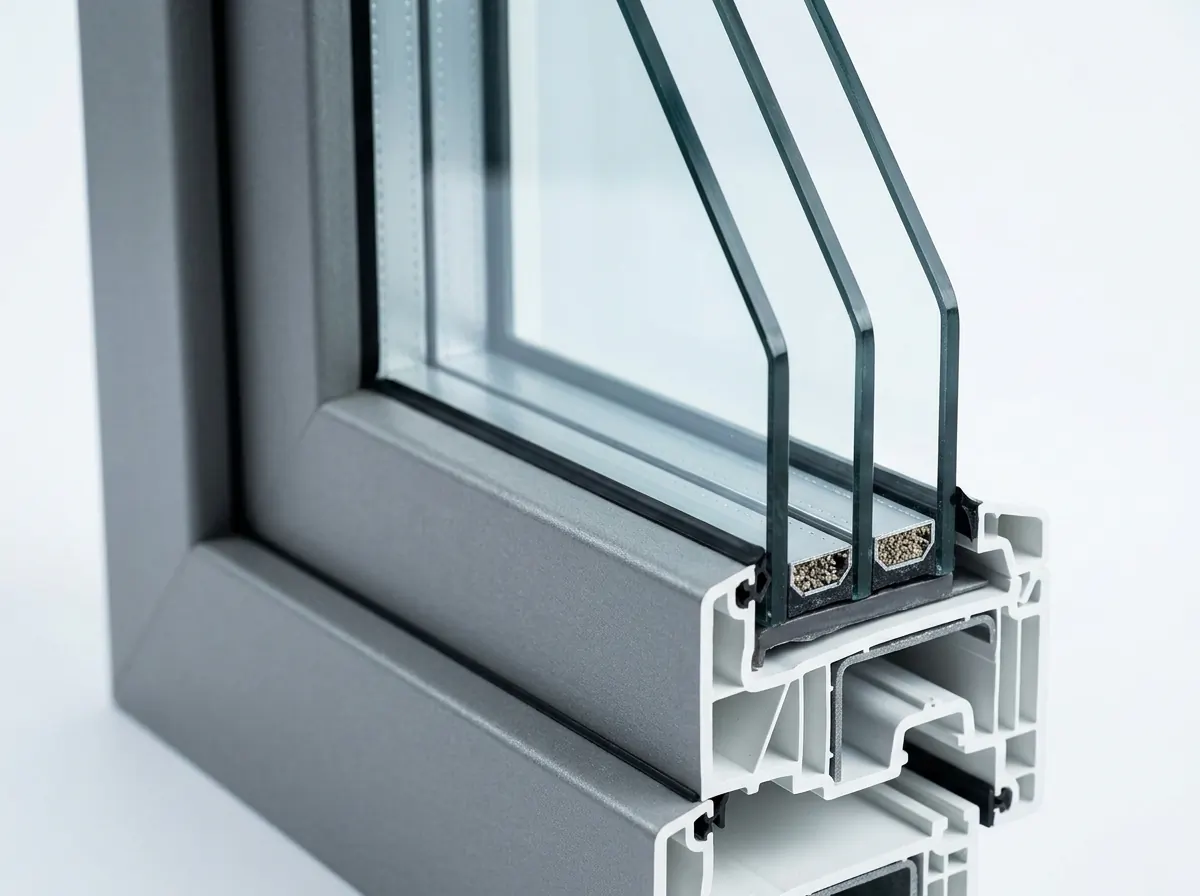
The space between panes in a double or triple-pane window is filled with an insulating gas, usually argon or krypton. These gases are denser than air and slow heat transfer significantly. Argon is the standard choice and very cost-effective. Krypton performs slightly better and is used in triple-pane configurations where the gap between panes is narrower.
Warm-Edge Spacers
The spacer bar that separates the two panes of glass is a common weak point. Aluminum spacers (common in older windows) conduct cold right through the edge of the glass, creating condensation and cold spots. Modern warm-edge spacers use materials like stainless steel or structural foam that dramatically reduce heat transfer at the edge.
Frame Materials Matter
In Colorado’s climate, we see vinyl frames hold up well for most applications. But for south-facing and west-facing exposures with heavy UV, fiberglass or Fibrex composite frames last significantly longer. Wood frames look beautiful but need consistent maintenance in our dry, sunny environment.
Real Energy Savings in Colorado Springs
I am not going to throw out generic numbers. Here is what we actually see with our customers.
A typical Colorado Springs home built in the 1980s or 1990s with original double-pane windows (non-Low-E, air-filled) spends around $200 to $300 per month on heating during peak winter months (December through February).
After a full window replacement with modern Low-E, gas-filled windows, most of our customers report heating bills dropping to $120 to $200 per month during those same peak months. That is a 25 to 40 percent reduction.
The savings are even more dramatic if you are replacing single-pane windows. Some of our customers in older neighborhoods like Old North End and Ivywild have seen heating bills cut nearly in half.
What I Recommend for Colorado Springs Homes
After thousands of installations in this area, here is my standard recommendation for most homes:
- Minimum: Double-pane with Low-E coating and argon gas fill. This is the baseline for any window going into a Colorado Springs home.
- Better: Add warm-edge spacers and Fibrex or fiberglass frames. This combination handles our temperature swings and UV exposure much better than basic vinyl.
- Best: Triple-pane with Low-E, krypton gas, and composite frames. This is the highest-performing option and makes the biggest difference in comfort and noise reduction. I especially recommend this for north-facing windows and homes in more exposed locations like Monument, Black Forest, and Woodland Park.
The ENERGY STAR Factor
Look for windows with the ENERGY STAR label for the Northern climate zone (which covers Colorado Springs). These windows meet minimum performance standards for U-factor (how well a window insulates) and Solar Heat Gain Coefficient (how much solar heat it lets through).
Even better, look for ENERGY STAR Version 7.0 Northern Zone certification — that’s the standard Colorado HB 23-1161 made mandatory on January 1, 2026. Products that meet it also unlock the Colorado rebate and insurance-discount stack that replaced the old federal credit.
Do Not Forget the Installation
Here is something most articles about energy-efficient windows miss: the best window in the world will underperform if it is installed poorly.
Gaps around the frame, missing insulation, poor flashing, and improper sealing can wipe out 20 to 30 percent of a window’s energy performance. This is why working with a certified installer matters so much.
At Dream Windows, every installation follows Andersen’s certified specifications. We insulate around every frame, flash every opening properly, and test for air infiltration before we call the job done.
Schedule a Free Energy Assessment
Making the Investment
Energy-efficient windows are not cheap. But in Colorado Springs, they are one of the smartest investments you can make in your home. Between energy savings, increased comfort, UV protection for your interiors, and higher resale value, quality windows pay for themselves faster here than almost anywhere else in the country. Our flexible financing options make it easier to start now and let monthly energy savings offset the payment.
If you are not sure where to start, give us a call at (719) 800-7817. We will come out, evaluate your current windows, and help you understand exactly what upgrades will make the biggest difference for your home and your budget.
help Frequently Asked Questions
Why do windows fail faster at high altitude? expand_more
How much can energy-efficient windows save on my heating bill? expand_more
What is the best window for Colorado Springs altitude? expand_more
Do I need triple-pane windows in Colorado? expand_more
Written by Michael Young
The Dream Windows and Doors team brings years of experience installing windows and doors across Colorado. We share our expert knowledge to help you make the best choices for your home.
See About Us →Ready to transform your home?
Get a free consultation for your window or door project in Colorado Springs. No hidden fees, just honest service.
Experience Our Unwavering Promise
At Dream Windows and Doors, quality craftsmanship, transparency, and the meticulous care of your home are not just policies -- they are our unwavering promise. From consultation to final inspection, we deliver precision installation you can count on. Discover the difference of a truly dedicated window and door partner.
Contact Our Team
Call Us Today
719-800-7817Email Us
info@dream-windows.comLocation
Colorado Springs, CO
Hours
Monday-Saturday 8am-6pm